
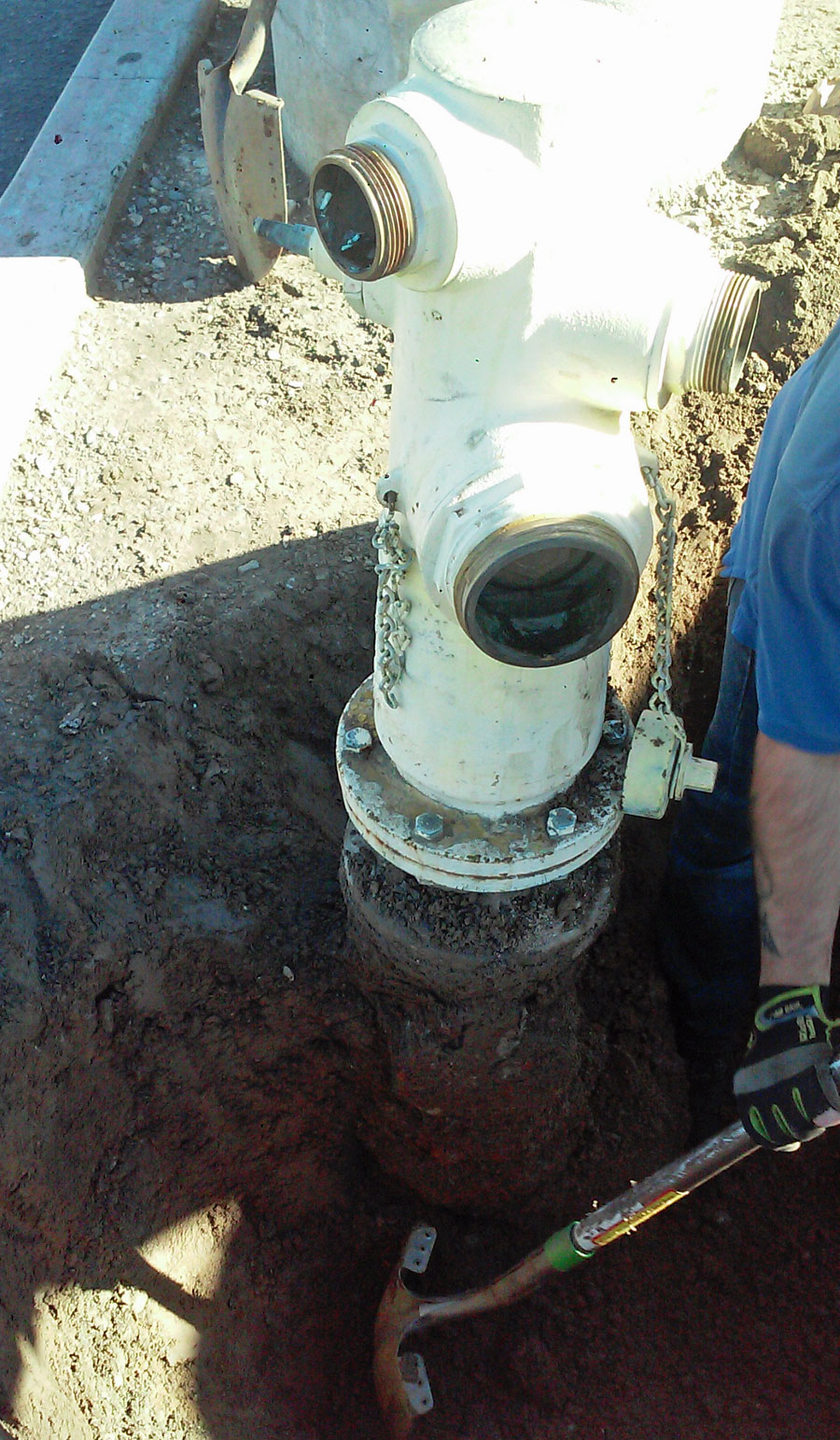
Most property owners assume that if a fire hydrant looks intact above ground, it must be functional. But what many don’t realize is that the real risks almost always lie beneath the surface. Underground valves, lateral supply lines, and buried connections deteriorate silently—sometimes for years—before anyone notices. In the Inland Empire, where heat, soil movement, aging infrastructure, and water mineral content all accelerate corrosion, routine fire hydrant service is the only way to detect these underground failures.
A hydrant may look perfectly normal, but if the water supply beneath it is compromised, firefighters could be left with inadequate flow during an emergency. And once that happens, lives and property are at immediate risk.
Why Underground Hydrant Components Fail Without Warning
Fire hydrants connect to a network of buried pipes, valves, and joints that must withstand constant pressure changes, temperature fluctuations, and shifting soil. According to the U.S. Fire Administration, underground component failure is one of the leading causes of hydrant malfunction during major fires.
Common below-ground issues include:
• Corroded laterals — Inland Empire water often carries high mineral content that accelerates pipe corrosion.
• Broken or stuck foot valves — A faulty valve can trap water or block flow entirely.
• Underground leaks — Small leaks can become large failures, reducing pressure drastically.
• Soil shifting or vehicle vibration damage — Especially common in busy commercial centers and industrial zones.
• Tree root intrusion — Roots can wrap around pipes and deform or break them.
Because these problems occur out of sight, property owners cannot identify them without professional flow testing and inspection.
The Dangerous “False Sense of Security” Problem
A fire hydrant can appear bright, painted, and seemingly functional—but that reveals nothing about internal performance. In fact, many hydrants pass casual visual checks but fail when actually tested.
During a fire event, firefighters depend on water pressure and flow volume. If either is insufficient, sprinkler systems inside the building may lose pressure as well, worsening the situation. According to NFPA 291, hydrants must deliver specific gallons per minute (GPM) depending on the hazard classification of the surrounding property.
A hydrant that fails to deliver minimum flow is considered noncompliant, even if the exterior appears flawless.
This is why true hydrant certification requires:
• Full-flow testing
• Residual pressure testing
• Static pressure measurement
• Valve verification
Only these tests can uncover hidden underground issues.
Signs Your Hydrant Might Be Compromised (Even If It Looks Fine)
Property owners should watch for the following subtle warning signs:
• Standing water around the hydrant base
• Rust streaks on bonnet or caps
• Difficulty turning the operating nut
• Loose or rattling caps
• Lower-than-usual water pressure in nearby systems
• Visible soil sinking or soft spots near the hydrant
• Leaning hydrant due to shifting soil
According to Ready.gov, early identification of compromised fire protection infrastructure drastically reduces the severity of fire-related losses.
Even so, many underground failures produce no external signs, making annual service essential.
What Professional Hydrant Service Uncovers
Certified hydrant technicians use specialized tools and flow-testing equipment to diagnose underground failures that would otherwise go unnoticed. A professional service includes:
• Full-flow GPM testing to measure output
• Residual pressure testing to confirm system health
• Underground leak detection
• Valve exercising to prevent future lockups
• Lubrication of moving parts
• Removal of cap corrosion
• Ensuring thread compatibility with local fire departments
• Pressure and functionality documentation
Often, service teams uncover hidden issues such as:
• Rusted foot valves
• Cracked rods
• Failing underground joints
• Clogged lateral lines
• Incorrectly installed piping
These issues can drastically impact emergency response performance but are only detectable during proper service.
Why Inland Empire Properties Must Remain Hydrant-Compliant
Cities throughout the Inland Empire—such as Riverside, San Bernardino, Ontario, Redlands, Corona, and Moreno Valley—enforce strict fire hydrant maintenance requirements.
A single noncompliant hydrant may lead to:
• Failed fire inspections
• Delayed construction approvals
• Liability exposure for fire-related losses
• Insurance disputes or claim denials
• Temporary shutdowns of operations
NFPA 291, local fire departments, and the California Fire Code all require annual testing and certification of private hydrants.
For HOAs, industrial complexes, retail centers, distribution hubs, and business parks, maintaining hydrant performance is not just a safety measure—it’s a regulatory obligation.
Your Inland Empire Experts for Fire Hydrant Service
Don’t wait for an emergency to discover underground hydrant failures. Cal Counties Fire Protection provides comprehensive Fire Hydrant Service throughout the Inland Empire, including flow testing, underground inspections, valve exercising, and compliance documentation. Need reliable hydrant certification or annual testing? Contact us today and ensure your hydrants deliver full flow when every second counts.